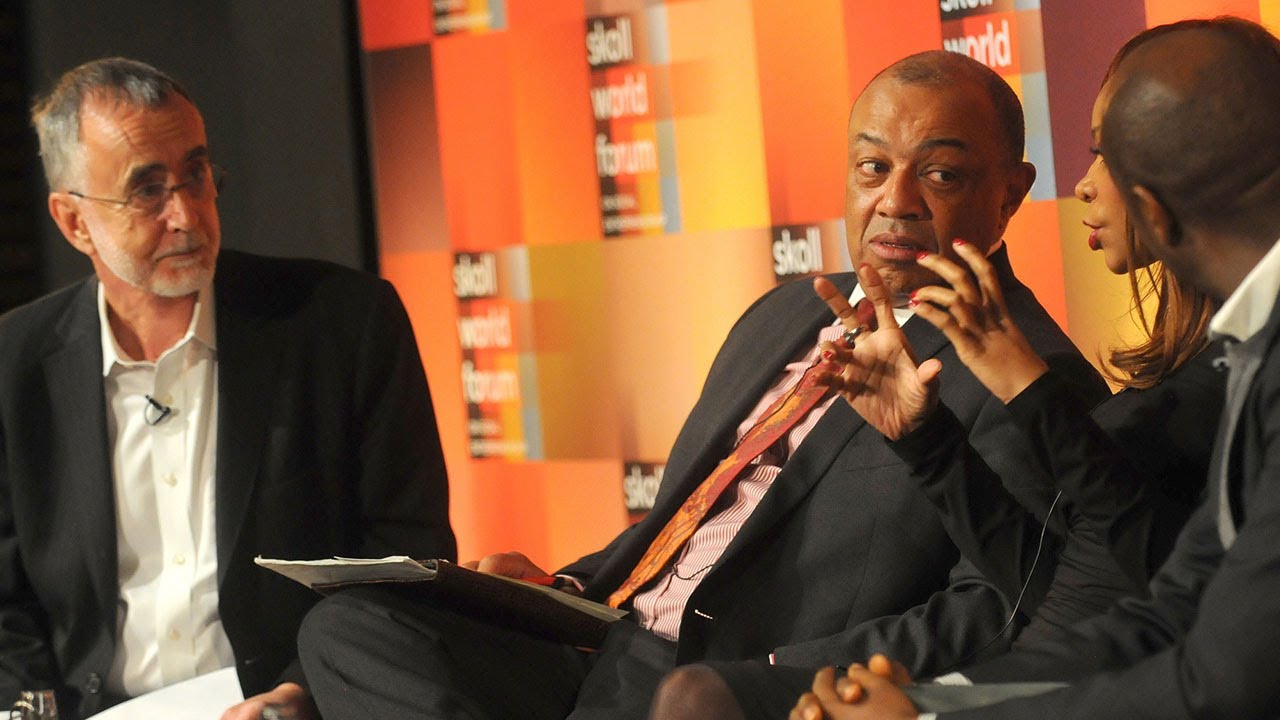
In an age of instant communication, strong economic growth in the south, and new geopolitical realities, why are we still using a 1960s model for aid? The global community is discussing next generation MDGs and measures for aid effectiveness. Now is the time for making practical suggestions to ensure we are not 'rearranging deck chairs', but engineering an aid model that both produces a high social return and is appropriate for the 21st century. What have we learned from radical innovations previously employed? What would a new model look like? How could it be implemented? Engage in a lively discussion of new approaches and potential models for success. Richard Feachem, KBE, CBE, BSc, PhD, DSc(Med), FREng, HonFFPHM, HonDEng. Sir Richard is Director of the Global Health Group at UCSF and Professor of Global Health at UC, San Francisco and Berkeley. From 2002-2007, he was Founding Executive Director of the Global Fund to Fight AIDS, TB and Malaria, and Under Secretary General of the United Nations. Dr. Feachem was formerly Director for Health, Nutrition and Population at the World Bank, and Dean of the London School of Hygiene and Tropical Medicine. The Right Honourable Lord Paul Boateng (Baron Boateng of Akyem Wembley), a Barrister of Grays Inn, having completed a four year term as British High Commissioner to South Africa (2005 -- 2009), was elevated to the Peerage in June 2010. He has 30 years' experience in public life in law, politics and diplomacy. Until he stepped down to take the post of High Commissioner in 2005, he was a Member of Parliament (1987 -- 2005), and he served as a Cabinet Minister and Chief Secretary to the Treasury under Tony Blair. He is a frequent writer, broadcaster and public speaker in Europe, Africa and the US. Dr. Dambisa Moyo is an international economist who analyses the macroeconomy and global affairs. She has travelled to over 50 countries and developed a unique knowledge base on the political, economic and financial workings of emerging economies. She is the author of The New York Times bestsellers 'Dead Aid'; 'How the West Was Lost'; and 'Winner Take All: China's Race for Resources and What it Means for the World.' In 2009, TIME Magazine named her one of the '100 Most Influential People in the World'. Andrew M. Mwenda is currently Strategy and Editorial Director of Independent Publications Limited. Mwenda worked as Political Editor of Daily Monitor and General Manager of its affiliate FM radio, KFM before establishing The Independent in 2007. He is a winner of the International Press Freedom Award and the Outstanding Alumni Award from the British Council. He holds a MA in Development Studies from the University of London's School of Oriental and African Studies and a BA degree in journalism from Makerere University in Uganda. Maura O'Neill is currently Strategy and Editorial Director of Independent Publications Limited. Mwenda worked as Political Editor of Daily Monitor and General Manager of its affiliate FM radio, KFM before establishing The Independent in 2007. He is a winner of the International Press Freedom Award and the Outstanding Alumni Award from the British Council. He holds a MA in Development Studies from the University of London's School of Oriental and African Studies and a BA degree in journalism from Makerere University in Uganda. Maura O'Neill is Chief Innovation Officer and Senior Counselor to Administrator at USAID. She co-led the worldwide reform effort, USAID Forward, and pioneered methods for achieving faster, less expensive scalable solutions to development. Maura has served as Chief of Staff in the U.S. Senate and has founded four companies in electricity, recycling and education. She taught entrepreneurship at UC Berkeley and serves as an advisor to many start-ups. She received MBAs from Columbia University and UC Berkeley and PhD from University of Washington. Bunker Roy is Founder and Director of Barefoot College, the only fully solar electrified college in the deserts of Rajasthan, established over 40 years ago. It is the only College in India built by the poor and managed by the rural poor who earn less than $1 a day, following the life style and work style of Mahatma Gandhi. Bunker was identified as one of the 50 environmentalists who could save the planet by The Guardian in 2008. In 2010, TIME magazine named him as one of the 100 most influential people in the world. He received his education in The Doon School and St. Stephens College Delhi University. The Skoll World Forum on Social Entrepreneurship accelerates the impact of the world's leading social entrepreneurs by uniting them with essential partners in a collaborative pursuit of learning, leverage and large scale social change. http://www.skollworldforum.org The Skoll Foundation drives large-scale change by investing in, connecting, and celebrating social entrepreneurs and other innovators dedicated to solving the world's most pressing problems. http://www.skollfoundation.org
Developing the Development Model: Reengineering Aid for the 21st Century - 2013 Skoll World Forum - YouTube |
| 11 Likes | 11 Dislikes |
| 2,374 views views | 11,626 followers |
| Non-profits & Activism | Upload TimePublished on 1 Jul 2013 |

Không có nhận xét nào:
Đăng nhận xét